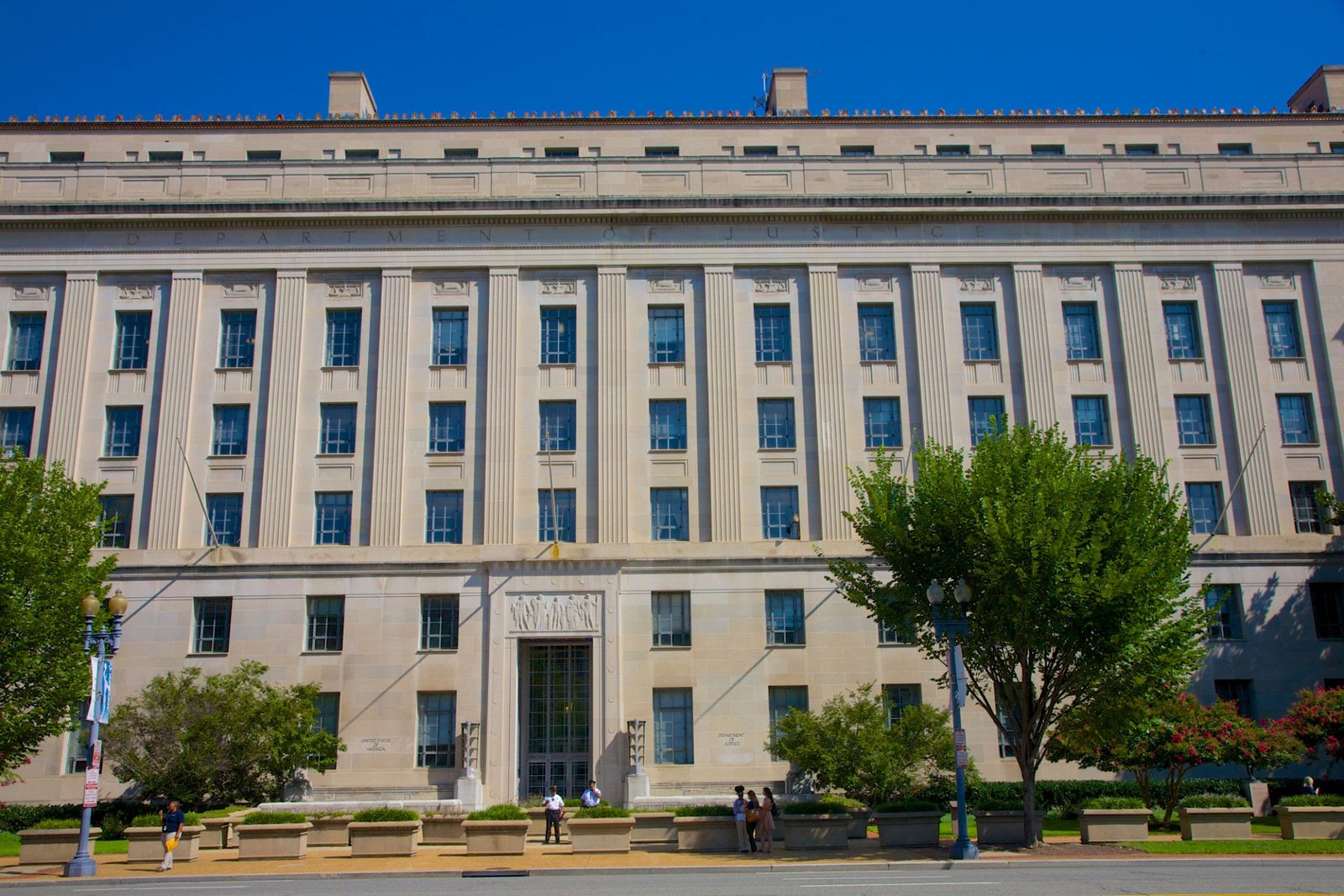
U.S. Department of Justice headquarters in Washington, D.C
WASHINGTON – The United States Department of Justice (DOJ) on Thursday officially declined a federal court order to turn over additional materials from the high-profile Jeffrey Epstein investigative files. The department argued that the withheld documents either contain highly sensitive victim information or were appropriately redacted under existing federal privacy laws.
Hours before the legal deadline to submit the records or justify their withholding, Associate U.S. Attorney General Stanley Woodward requested the presiding judge to either extend the deadline by 60 days or throw out the order entirely by accepting the government’s justification for the redactions. Protecting Victim Privacy and Addressing Technical Limitations
In his official response, Woodward emphasized that concealing the names of senders and recipients in several emails was necessary to shield the identities of victims. He added that certain communications written directly by victims could appear deeply disturbing or be easily misinterpreted if released without their full context.
Regarding a draft 2007 indictment originating from the Southern District of Florida, the DOJ stated that the redactions were already present on the original photocopy in their possession. The department noted that investigators have been unable to locate an unredacted version of that specific document.
Another point of contention involved handwritten interview notes from a woman who made uncorroborated assault allegations against Donald Trump—claims that Trump has categorically denied and which remain unverified. The DOJ clarified that typewritten reports summarizing those interviews have already been made public. They argued that releasing the underlying handwritten notes would be redundant and presented a high risk of accidentally exposing personally identifiable information (PII) due to technological limitations in running quality control checks across handwritten text.
Legal Friction Between the DOJ and Federal Judges
The Justice Department also pushed back against conclusions drawn by U.S. District Judge Emmet Sullivan, who suggested last week that the department had effectively conceded to violating a congressional transparency law.
“Indeed, the Department has not knowingly violated, nor has it ever acknowledged violating, the [Epstein Files Transparency Act] as it continues working to comply with statutory requirements,” Woodward stated in the filing.
Judge Sullivan’s prior ruling sided with the Public Integrity Project, a public interest law firm representing independent journalist Katie Phang, which argued that withholding these specific investigative materials directly hindered journalistic transparency.
While the DOJ began releasing thousands of pages of Epstein-related documents late last year following the passage of the Epstein Files Transparency Act, the agency continues to face scrutiny from lawmakers who question the validity of ongoing redactions and missed compliance deadlines.