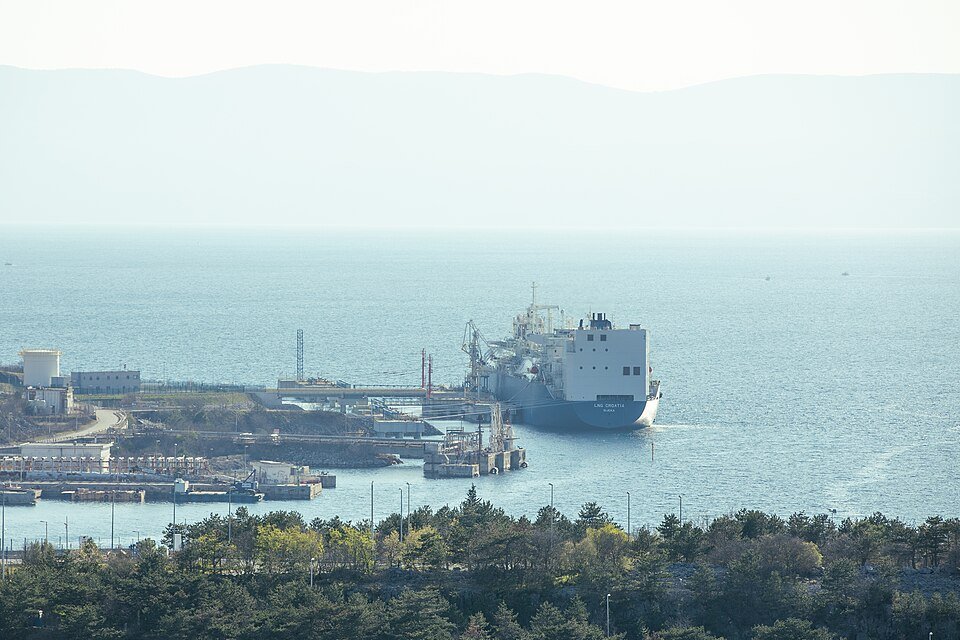
Oil tanker, gas tanker in the high sea Refinery Industry cargo ship (52848038105).jpg Creative Commons Attribution 2.0
WASHINGTON / TEHRAN — Tensions between the United States and Iran have escalated following a series of military exchanges in the Middle East, with both nations accusing each other of violating a recently established ceasefire agreement.
The latest friction began on Saturday after a drone strike targeted the MT Kiku, a Panama-flagged commercial vessel transiting the Strait of Hormuz. In response, US Central Command (CENTCOM) announced it conducted targeted air strikes against 10 Iranian military assets in the vicinity of the strategic waterway. According to US military officials, the targets included communication networks, air defense systems, and unmanned aerial vehicle (UAV) storage facilities.
CENTCOM stated that the military action was a direct response to “continued aggression” against international commercial shipping lanes, noting that the attack on the tanker constituted a breach of the 14-point Memorandum of Understanding (MoU) signed between the two nations on June 17.
Retaliation and Regional Security Measures
Following the US strikes, Iran’s Islamic Revolutionary Guard Corps (IRGC) issued a statement confirming it had launched missile and drone counter-strikes targeting regional infrastructure utilized by US forces, specifically naming the Ali al-Salem airbase in Kuwait and the Fifth Naval Fleet facilities in Bahrain.
A US defense official speaking to Reuters stated that there were no reported US casualties or significant structural damage to American facilities in the region. However, both Kuwait and Bahrain confirmed that their respective national air defense systems were activated during the incident to intercept incoming threats.
The IRGC claimed that under the framework signed earlier this month, Iran retains administrative authority over maritime transit through the Strait of Hormuz, warning that future non-compliant vessels would face stricter enforcement measures. Iran’s Foreign Ministry formally condemned the US air strikes, labeling them a direct violation of the ceasefire agreement.
Diplomatic Strain and the Strait of Hormuz Framework
The escalation comes less than 24 hours after a separate exchange involving a strike on a Singapore-flagged cargo vessel, the MV Ever Lovely, on June 25. Tehran maintained that the vessel was intercepted for utilizing an unauthorized maritime route, while Washington viewed the intervention as an unprovoked disruption of global commerce.
The June 17 agreement was designed to halt months of hostilities and secure free passage through the Strait of Hormuz—a vital maritime chokepoint for global energy and commodity shipments. The waterway had faced operational disruptions following geopolitical friction earlier this year, impacting international oil prices and supply chains.
While international mediators continue to monitor the situation, official statements from Washington indicate that further diplomatic negotiations remain contingent upon adherence to international maritime law and the complete cessation of hostilities in global shipping lanes.